
A palatal expander is an orthodontic device that gently widens your child’s upper jaw to create more room for teeth and correct a narrow arch. It works during a child’s natural growth years to reshape the foundation of the bite. If your child has crowding, a crossbite, or a narrow palate, Dr. Brian Bolerjack can help you find out whether this appliance is the right fit.
What Is a Palatal Expander?
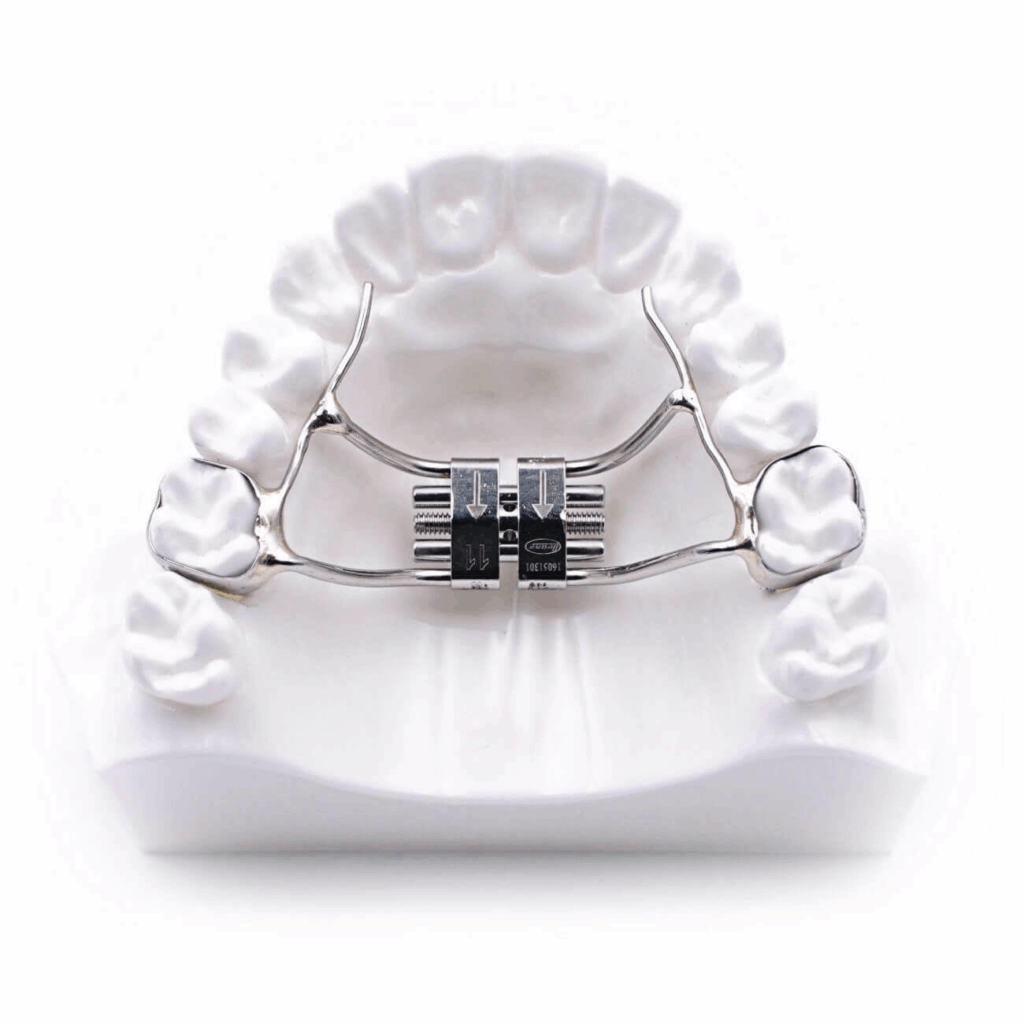
A palatal expander is a custom orthodontic appliance that widens the upper jaw by applying steady, gentle pressure to the two halves of the palate. It creates more space for crowded teeth, corrects narrow arches, and treats the foundation of your child’s bite, not just tooth position.
The device attaches to the upper molars and sits along the roof of the mouth. It’s adjusted gradually, usually with a small key, to guide the jaw into a wider position over time.
Expanders work best in kids and younger teens because the two halves of the upper jaw haven’t fully fused yet. That growth window makes expansion smoother and more predictable.
Dr. Bolerjack often recommends an expander when the underlying issue is skeletal, not just crooked teeth. Fixing the foundation early, as part of early orthodontic treatment for children, can prevent bigger issues later.
How Does a Palatal Expander Work?
A palatal expander works by applying light, steady pressure to the palatal suture, the natural seam that runs down the center of the upper jaw. Parents turn a small key in the device once or twice a day, which slowly widens the appliance and encourages the two halves of the palate to separate. New bone then fills in the gap.
Treatment happens in two phases:
- Active expansion phase. This is the part where you turn the key daily. It usually lasts a few weeks, depending on how much widening your child needs.
- Retention phase. Once the desired width is reached, the expander stays in place without further adjustments. This gives new bone time to fill in and stabilize the correction.
Most kids wear the expander for several months in total. Removing it too early can allow the palate to relapse, so Dr. Bolerjack will let you know exactly when it’s time.
You might notice a small gap opening between your child’s front teeth during expansion. That’s actually a good sign, and it means the appliance is working. The gap tends to close on its own as teeth shift into place.
Today’s expanders are more comfortable than they used to be. Kids often adjust within a few days and settle right back into their normal routines. During your free consult, Dr. Bolerjack will map out a custom treatment plan and walk you through each phase so you know what to expect.
What Do Palatal Expanders Treat?
Expanders do more than make room for teeth. They can set the stage for a healthier bite, easier breathing, and simpler orthodontic care down the road. Benefits of a palatal expander include correcting crossbites, reducing crowding, improving breathing, shortening future treatment, and taking advantage of your child’s natural growth.
How does an expander fix a crossbite?
When upper teeth sit inside the lower teeth, the arches don’t meet the way they should. An expander widens the upper jaw so the bite fits together properly, which can protect against uneven wear and jaw strain as your child grows. Correcting a crossbite early also keeps the jaw from shifting to one side over time.
Can an expander reduce crowding and help breathing?
Yes. Extra space in the upper jaw can help crowded teeth erupt in better positions, sometimes avoiding tooth extractions later. A wider palate can also open up nasal airflow in some kids, which may help with mouth breathing or nighttime breathing issues.
Other advantages worth knowing:
- Shortens future treatment. By fixing the foundation early, follow-up braces or Invisalign treatment is often faster and simpler.
- Takes advantage of natural growth. Results are most predictable while the upper jaw is still developing, generally during childhood.
Early expansion is one of the best ways to get ahead of a bite issue before it becomes harder to correct.
Types of Palatal Expanders Compared
Not all expanders are the same. Dr. Bolerjack will recommend the type that fits your child’s age, growth stage, and specific bite concerns.
Fixed expanders tend to give the most predictable results because they stay in place and work around the clock. Removable options require more cooperation but can be a good fit for select cases.
For older teens and adults, traditional expanders may not work because the palate has already fused. Implant-supported expanders can still create real skeletal changes at that age, though they’re a more specialized option.
Dr. Bolerjack will walk you through the choice during your free consultation and explain exactly why one type suits your child better than another. Once expansion is complete, your child may move on to the next stage of care, whether that’s traditional braces or Invisalign clear aligners, as part of a broader plan.
What Affects the Cost of a Palatal Expander?
The cost of a palatal expander depends on the type of appliance, the length of treatment, and whether it’s part of a larger orthodontic plan. Insurance coverage and payment structure also play a role. We provide a clear, custom estimate at your free consultation so there are no surprises.
Several factors influence the final price:
- Type of expander. Fixed, removable, and implant-supported options come with different fees.
- Treatment complexity. A more significant crossbite or narrow palate may require longer wear or additional appliances.
- Part of a larger plan. If expansion is one step within a full braces or Invisalign plan, pricing is usually bundled.
- Insurance benefits. Many orthodontic plans cover a portion of treatment for kids.
- Flexible financing. We offer worry-free payment plans that fit your family’s budget.
While national figures vary widely, a standalone expander generally costs less than a full course of braces, and bundling the two often brings better value overall. Rather than quoting a range that may not apply to your child, our board-certified orthodontist prefers to give you an accurate number after a proper exam. That way, you know precisely what your investment covers and how flexible financing can spread the cost across your treatment.
Does My Child Need a Palatal Expander?
Your child may need a palatal expander if they show signs of a narrow upper jaw, a crossbite, significant crowding, or difficulty with mouth breathing. The best time to evaluate is between ages 7 and 11, while the jaw is still growing. An exam with a board-certified orthodontist is the only way to know for sure.
Common signs an expander could help:
- Upper back teeth bite inside the lower teeth (crossbite)
- Crowded or overlapping teeth as adult teeth come in
- A narrow, V-shaped upper arch
- Frequent mouth breathing or snoring
- Difficulty chewing on one side
- A jaw that shifts to one side when biting down
The American Association of Orthodontists recommends that every child have an orthodontic check by age 7. By then, enough permanent teeth have come in for Dr. Bolerjack to spot developing issues early, even when treatment isn’t needed right away. The AAO also notes that early evaluation gives families the widest range of treatment choices before growth slows.
At your free consult, we’ll take digital X-rays and photos, look at how your child’s jaw is growing, and build a custom treatment plan for your family’s smile goals. Here’s what to expect at that first visit. If an expander isn’t the right answer, we’ll tell you that too. You’ll never feel pushed toward treatment your child doesn’t need.
Dr. Bolerjack is a board-certified orthodontist, a distinction not all orthodontists hold. That level of expertise matters when you’re making decisions about your child’s growing smile, and it’s the kind of care our whole team is proud to deliver.
Frequently Asked Questions About Palatal Expanders
How long do you have to wear a palatal expander?
Most kids wear a palatal expander for several months. The active turning phase usually lasts a few weeks, and then the appliance stays in place during a retention phase so new bone can fill in and stabilize the correction. Dr. Bolerjack will give you an exact timeline based on your child’s case.
Does a rapid palatal expander hurt?
No, a rapid palatal expander shouldn’t cause real discomfort. Kids often feel light pressure or a tingling sensation after each turn, and this passes within a few minutes. The first few days take some getting used to, but most children adjust quickly and go back to normal activities.
How do you eat and clean with an expander?
Stick to soft foods for the first day or two while your child adjusts. After that, most foods are fine, though it’s smart to avoid sticky candy, hard nuts, and anything crunchy that could damage the appliance. For cleaning, brush around the expander carefully and rinse with water after meals to keep food from collecting on the device.
What does wearing a palatal expander feel like?
Your child will notice the expander for the first few days, especially when eating and talking. Speech may sound a little different at first, and there can be extra saliva. These changes tend to fade within a week as the mouth adapts. After that, most kids barely think about the appliance.
Can adults use palatal expanders?
Yes, but the approach is different. In adults, the two halves of the upper jaw have already fused, so traditional expanders don’t work the same way. Implant-supported expanders (called MARPE) can create real skeletal expansion in older teens and adults. Explore our orthodontic options for adults, or ask Dr. Bolerjack if you’re a good candidate during a free consultation.
Will my child have a lisp or speech changes?
A short adjustment period with speech is normal. Some children develop a mild lisp during the first week as their tongue gets used to the appliance. This almost always resolves on its own with practice and normal talking. Reading aloud at home can help speed the process along.
Finding Out if a Palatal Expander Is Right for Your Child
You deserve a stunning smile, and so does your child. Dr. Brian Bolerjack and the team provide board-quality orthodontic care in a comfortable and easy experience where you and your family will be treated like family. We’ll go the extra mile to answer your questions and help you feel confident about every step.
Schedule a free consultation whenever you’re ready, and let’s create your smile together.